

Launching an eyewear brand requires more than great designs. Choosing the right OEM eyewear manufacturer is one of the most important sourcing decisions, affecting product quality, sampling, lead times, production consistency, and long-term growth.
Whether you are developing a new collection or looking for a more reliable manufacturing partner, evaluating a supplier beyond price alone can help reduce production risks and build a more consistent supply chain.
1. Evaluate Manufacturing Experience
Eyewear production involves many processes, from material selection and frame construction to polishing, assembly, lens fitting, and final inspection.
An experienced eyewear manufacturer should understand how different materials and frame structures affect production, quality, lead times, and cost.
When evaluating a potential supplier, consider:
- Years of eyewear manufacturing experience
- Experience serving international markets
- Familiarity with different frame materials
- Ability to manage sampling and mass production
- Understanding of international quality requirements
Manufacturing experience becomes especially important when developing custom products that require adjustments during sampling.
2. Check Material and Product Capabilities
Different eyewear collections require different materials, constructions, and production processes.
A reliable OEM eyewear manufacturer should be able to support the materials and product categories required for your project.
Common frame materials include:
- Acetate
- TR90
- Metal
- Combination constructions
Product categories may include:
- Optical frames
- Sunglasses
- Kids eyewear
- Reading glasses
For brands developing multiple collections, working with a manufacturer that can coordinate different materials and product categories can simplify sourcing and improve communication.

3. Review Quality Control Systems
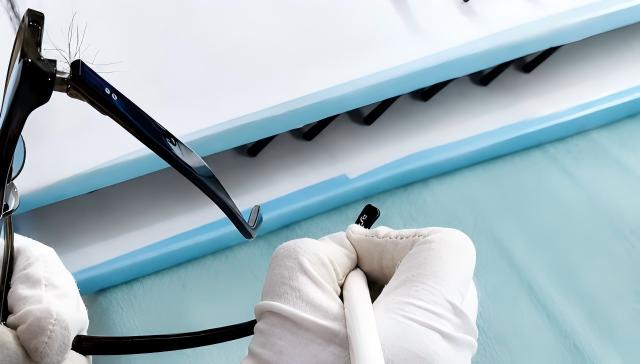
Quality control is critical in eyewear manufacturing. Small inconsistencies in polishing, hinges, frame alignment, surface finishing, or assembly can significantly affect the appearance and performance of the finished product.
Before selecting a supplier, ask about its quality control procedures, including:
- Incoming material inspection
- In-process quality checks
- Frame alignment and fitting inspection
- Surface and finishing inspection
- Final product inspection
- Compliance testing when required
A structured QC process helps reduce defects and ensures greater consistency between approved samples and mass production.
4. Understand OEM and ODM Capabilities
Not every eyewear project starts at the same stage.
If your brand already has completed designs, technical drawings, or reference samples, OEM eyewear manufacturing may be the most suitable approach.
If you need additional support with frame development, materials, dimensions, colors, or construction details, an ODM partner can help develop the concept into a production-ready product.
A capable OEM/ODM supplier should be able to support the project from initial development through sampling, revisions, production, and final quality verification.
5. Ask About MOQ and Sampling
MOQ is an important consideration, particularly for emerging brands or companies testing new styles.
Before starting development, confirm:
- MOQ per model
- MOQ per color
- Sample cost
- Sample lead time
- Whether custom colors or components affect MOQ
- Production lead time after sample approval
A good manufacturing partner should clearly explain these requirements before the project moves into production.
For brands launching new collections, reasonable MOQs can also make it easier to test different styles without committing to excessive inventory.
6. Check Compliance and Testing Support
Eyewear sold in different markets may need to meet specific regulatory or performance requirements.
Depending on the product and destination market, requirements may include standards related to sunglasses, optical frames, materials, lenses, or chemical compliance.
Ask your manufacturer whether they can support relevant testing and documentation, such as CE, REACH, RoHS, FDA, ANSI, or other applicable standards.
Compliance requirements should ideally be discussed during product development rather than after production has already started.
7. Assess Communication and Lead Times
Good manufacturing is only part of a successful eyewear project.
Clear communication during development and production can prevent misunderstandings involving colors, dimensions, components, packaging, and delivery schedules.
A reliable manufacturing partner should provide clear information about:
- Sampling progress
- Required approvals
- Production schedules
- Potential manufacturing issues
- Quality concerns
- Expected delivery dates
Transparent communication is especially important when multiple styles or colors are being developed simultaneously.
8. Look Beyond the Lowest Price
Price is important, but choosing an OEM eyewear factory based only on the lowest quotation can create additional costs later.
Poor finishing, inconsistent colors, weak quality control, delayed production, or repeated sample revisions can quickly outweigh a small difference in unit price.
Instead, evaluate the overall value of the supplier, including manufacturing capability, quality consistency, communication, development support, and reliability.
Conclusion
Choosing the right OEM eyewear manufacturer means finding a partner that can support more than production alone.
Manufacturing experience, material capabilities, sampling, MOQ, quality control, compliance support, communication, and reliable lead times should all be considered before placing an order.
A strong manufacturing partnership can help eyewear brands reduce sourcing risks, maintain consistent product quality, and develop new collections more efficiently.
Yes. We support private label acetate eyewear projects including custom frame development, acetate colors, logo application, sampling, production and custom packaging.